
Fly Ash Brick Admixture Guide: Stronger Bricks, Lower Cost
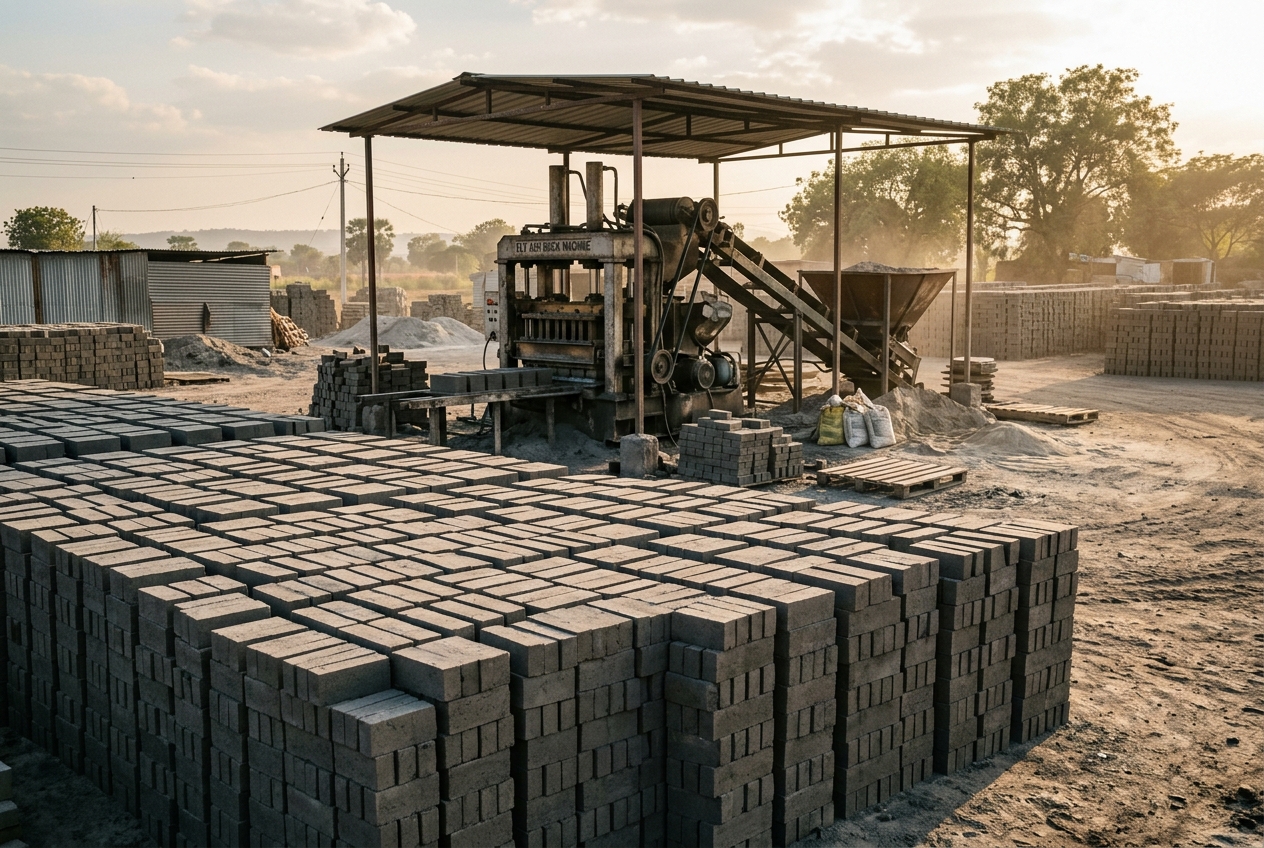
Fly ash brick makers face a squeeze between rising cement prices and demand for higher strength. A purpose-made admixture solves both – here is how it works and how to dose it.
Fly ash bricks have replaced clay bricks across much of India because they are lighter, more uniform and far more environmentally friendly. But brick makers face constant pressure: cement is the biggest cost, customers demand higher compressive strength, and breakage during handling eats margins. A well-formulated fly ash brick admixture addresses all three.
What is in a fly ash brick
A typical mix is 55-65% fly ash, 20-30% sand or stone dust, 5-10% cement and 5-10% lime or gypsum. Strength comes from the pozzolanic reaction between the fly ash silica and the calcium hydroxide from cement and lime. That reaction is slow and depends heavily on curing.
What the admixture does
A fly ash brick admixture is a liquid blend of plasticisers, accelerators and binders that:
- Improves compaction by reducing the water demand of the mix, so the brick is denser with fewer voids.
- Accelerates the pozzolanic reaction, giving higher early strength (24-72 hours) and better final strength.
- Improves green strength, so fresh bricks can be handled and stacked with less breakage.
- Reduces efflorescence and improves surface finish.
The results brick makers typically see
| Parameter | Without admixture | With admixture |
|---|---|---|
| Compressive strength (28 days) | 7-9 MPa | 10-14 MPa |
| Cement in mix | 8-10% | 5-7% |
| Breakage in handling | 5-8% | < 2% |
| Water absorption | 15-18% | 10-13% |
Because cement can be cut by 25-35% while strength rises, the admixture more than pays for itself on cement savings alone.
How to dose it
- Typical dosage: 200-300 ml per 50 kg bag of cement (or as per supplier data sheet)
- Dilute the admixture in the mixing water; never add it neat to dry material.
- Reduce mixing water by 8-12% – the admixture makes the mix workable at lower water.
- Mix for at least 3-4 minutes so the admixture is uniformly distributed.
Curing still matters
Admixtures speed up the reaction but do not replace curing. Water-cure bricks for a minimum of 7 days (14 is better), keep them out of direct sun for the first 24 hours and stack them so air can circulate. Steam or hot-water curing with admixture can cut the cycle dramatically for plants that need faster turnover.
Common mistakes to avoid
- Using old or lumpy fly ash with low reactivity (check loss on ignition ≤ 5%)
- Over-watering the mix – strength drops fast as water rises
- Skipping the lime/gypsum component when reducing cement
- Not calibrating the dosing pump on the mixer
Related products
The same principles apply to paver block admixtures and interlocking brick admixtures, which are tuned for higher density and abrasion resistance.
VB Global supplies fly ash brick, paver block and interlocking brick admixtures along with concrete admixtures, tile adhesives and waterproofing chemicals. Ask us for a dosage trial at your plant.